Concept preview. Not indexed. Facts are checked against the sources listed on each page.
How long would it take to get to Jupiter?
Jupiter is 365,676,946 miles from Earth at its closest and 601,797,999 miles at its farthest. A car at 65 mph would need 642 years for the shorter distance and 1,056 years for the longer. A passenger jet at 570 mph would need 73.2 years and 120 years.
365,676,946 mi
Distance at the closest
32 minutes 43 seconds
Light travel time at the closest
642 years
By car at 65 mph
73.2 years
By jet at 570 mph
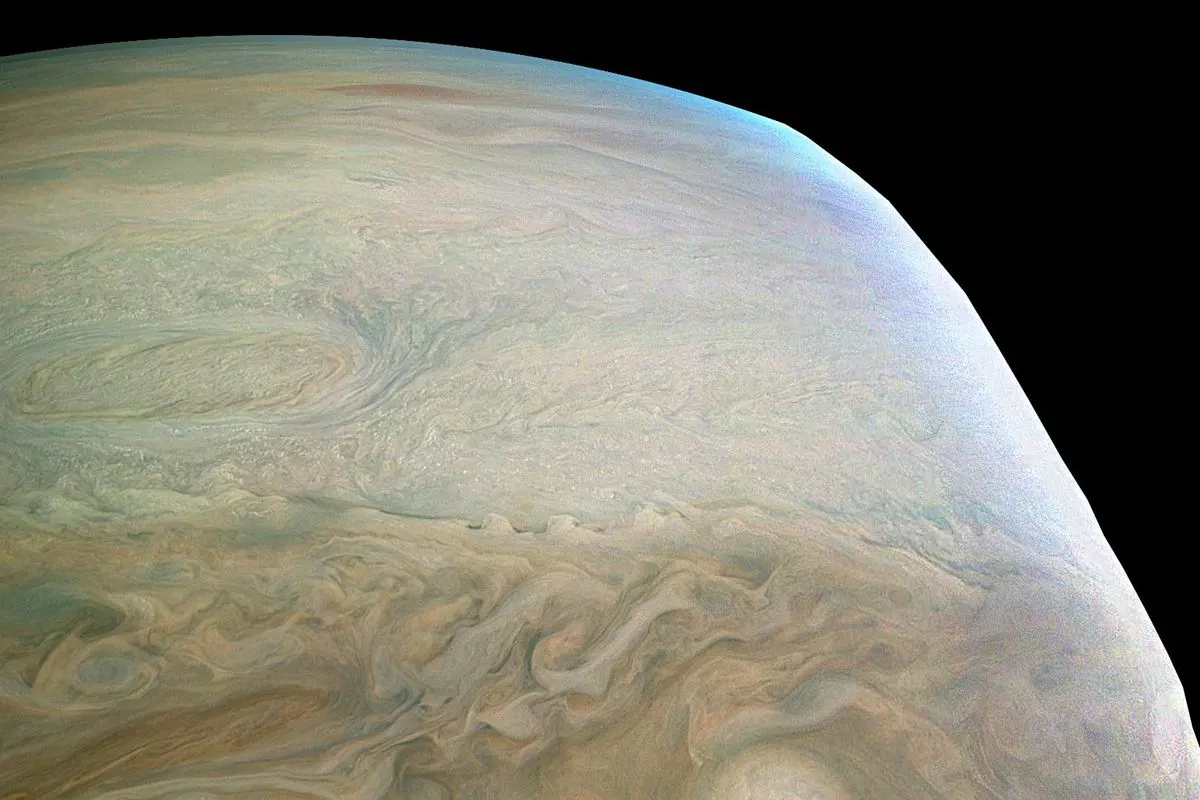
Travel time by vehicle
| Vehicle | Speed | Closest | Typical | Farthest |
|---|---|---|---|---|
| Walking | 3 mph | 13,905 years | 18,394 years | 22,884 years |
| Bicycle | 12 mph | 3,476 years | 4,599 years | 5,721 years |
| Car on a highway | 65 mph | 642 years | 849 years | 1,056 years |
| Passenger jet | 570 mph | 73.2 years | 96.8 years | 120 years |
| SR-71 Blackbird, its official speed record | 2,193 mph | 19.0 years | 25.2 years | 31.3 years |
| Voyager 1, about 17 km/s | 38,028 mph | 401 days | 530 days | 659 days |
| Parker Solar Probe at closest approach, 692,000 km/h | 429,989 mph | 35 days | 47 days | 58 days |
| Light | 670,616,629 mph | 32 minutes 43 seconds | 43 minutes 17 seconds | 53 minutes 51 seconds |
How long real spacecraft took
Voyager 1 needed 547 days and Juno 4.9 years. Spacecraft rarely fly straight at a target. They follow curved paths timed to launch windows, so the trip is longer than the distance alone suggests.
| Mission | Launched | Arrived | Trip time | What happened |
|---|---|---|---|---|
| Voyager 1 | September 5, 1977 | March 5, 1979 | 547 days | Closest approach to Jupiter |
| Juno | August 5, 2011 | July 5, 2016 | 4.9 years | Entered orbit around Jupiter |
Why the answer changes
Jupiter is 1.6 times farther away at its farthest than at its closest, so every travel time above is 1.6 times longer at the far end. The distance depends on where both planets are in their orbits. The closest figure is the smallest possible gap, and the typical figure is the midpoint between the closest and the farthest.
Try your own speed
Other destinations
Sources and method
- Distances: NASA Planetary Fact Sheet, accessed October 18, 2026. Closest and farthest are the minimum and maximum distance from Earth in NASA's table. Typical is the midpoint, except for the Moon (average distance) and the Sun (mean distance).
- Vehicle speeds are round figures chosen for comparison, not measurements. Light travels at 299,792.458 km/s.
- Voyager 1: NASA NSSDC closest-approach table; launch date from GCAT.
- Juno: NASA JPL press kit for the launch date; orbit insertion time in UTC from Wikipedia.