Concept preview. Not indexed. Facts are checked against the sources listed on each page.
How long would it take to get to the nearest star?
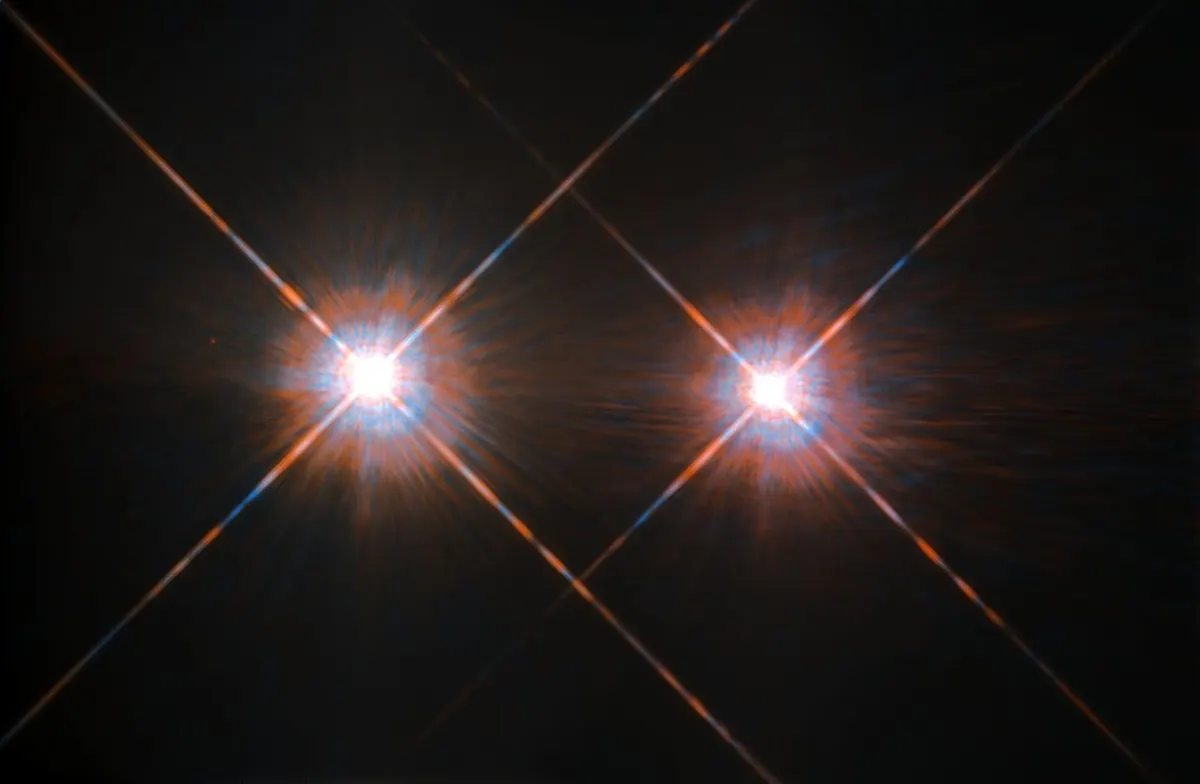
The nearest star, Proxima Centauri, is about 4.25 light years away, roughly 24,963,582,637,689 miles. A car at 65 mph would need 43,811,900 years. A passenger jet at 570 mph would need 4,996,094 years. Even at Voyager 1's speed of about 17 km/s the trip takes 74,886 years.
24,963,582,637,689 mi
Distance
4.2 years
Light travel time
43,811,900 years
By car at 65 mph
4,996,094 years
By jet at 570 mph
Travel time by vehicle
| Vehicle | Speed | Time to Proxima Centauri |
|---|---|---|
| Walking | 3 mph | 949,257,839 years |
| Bicycle | 12 mph | 237,314,460 years |
| Car on a highway | 65 mph | 43,811,900 years |
| Passenger jet | 570 mph | 4,996,094 years |
| SR-71 Blackbird, its official speed record | 2,193 mph | 1,298,574 years |
| Voyager 1, about 17 km/s | 38,028 mph | 74,886 years |
| Parker Solar Probe at closest approach, 692,000 km/h | 429,989 mph | 6,623 years |
| Light | 670,616,629 mph | 4.2 years |
At the speed of real spacecraft
No spacecraft is heading for Proxima Centauri. Voyager 1 is leaving the solar system at about 17 km/s and would take 74,886 years to cover the distance. Parker Solar Probe reaches 692,000 km/h (about 192 km/s) at its closest approach to the Sun, the fastest any spacecraft has gone. Holding that speed all the way would still take 6,623 years. Light needs 4.2 years.
Try your own speed
Other destinations
Sources and method
- Distances: NASA Planetary Fact Sheet. The distance to Proxima Centauri uses a light year of 9,460,730,472,580.8 km and a parallax distance of about 4.2465 light years.
- Vehicle speeds are round figures chosen for comparison, not measurements. Light travels at 299,792.458 km/s.